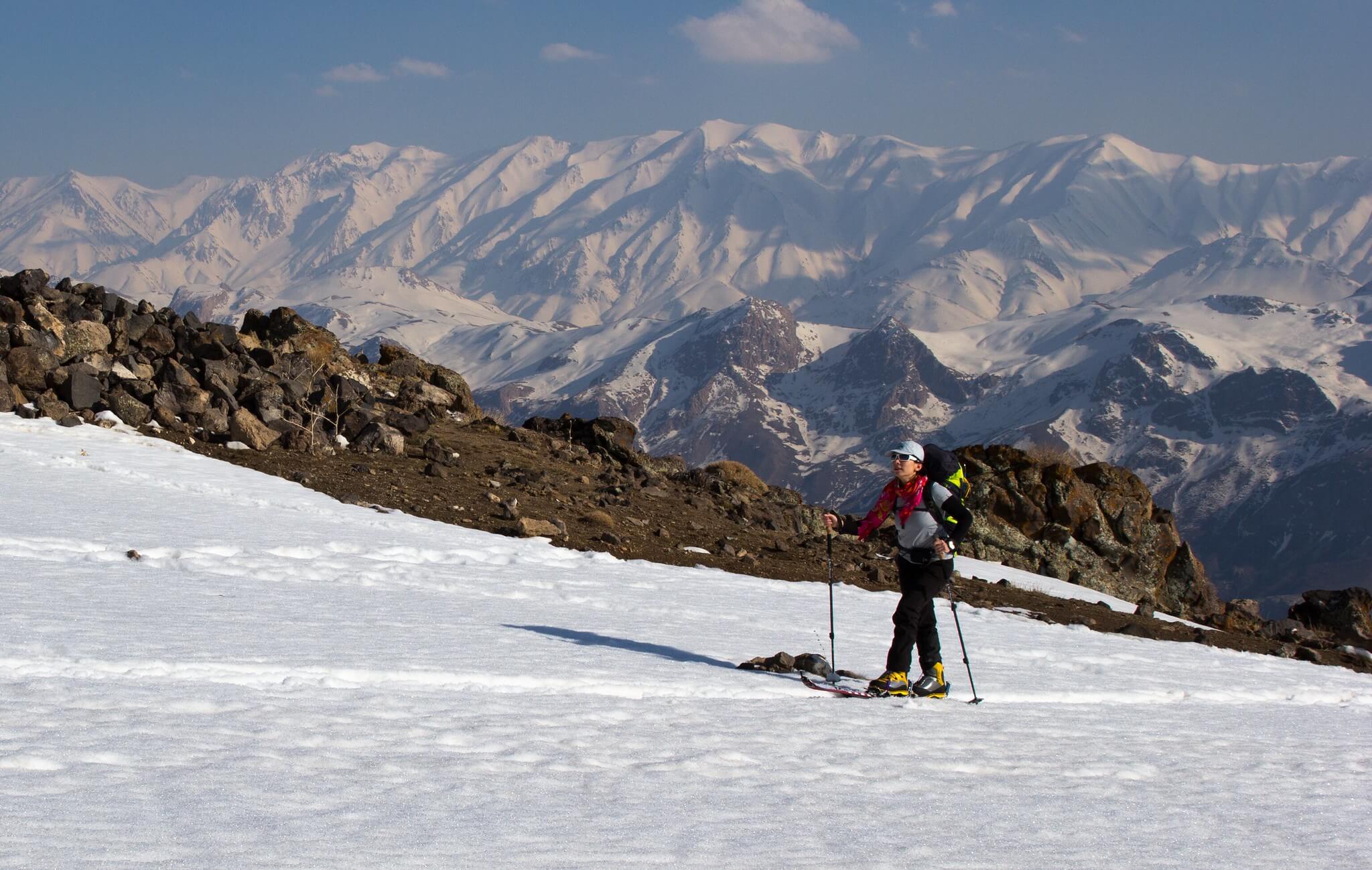
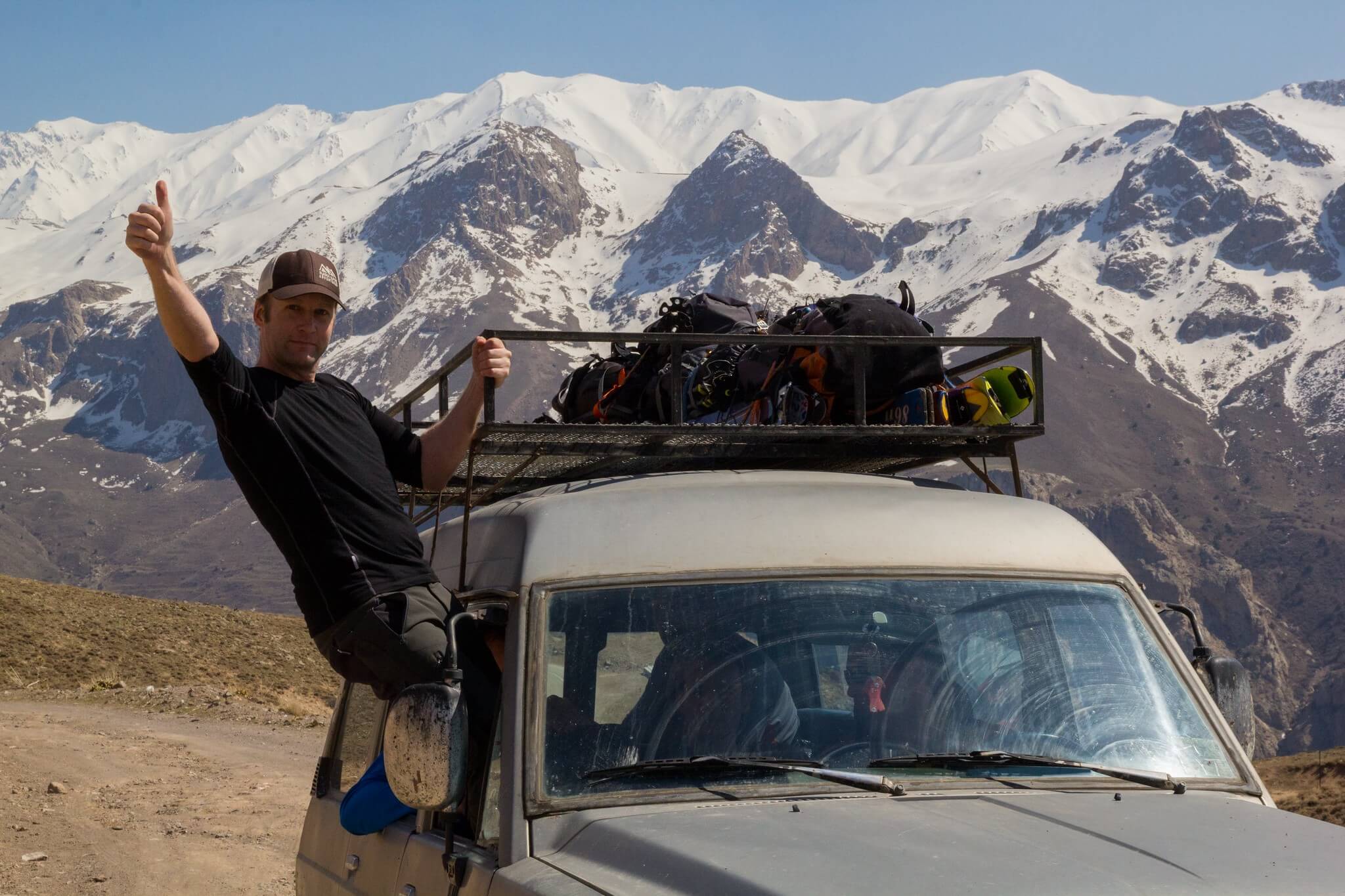
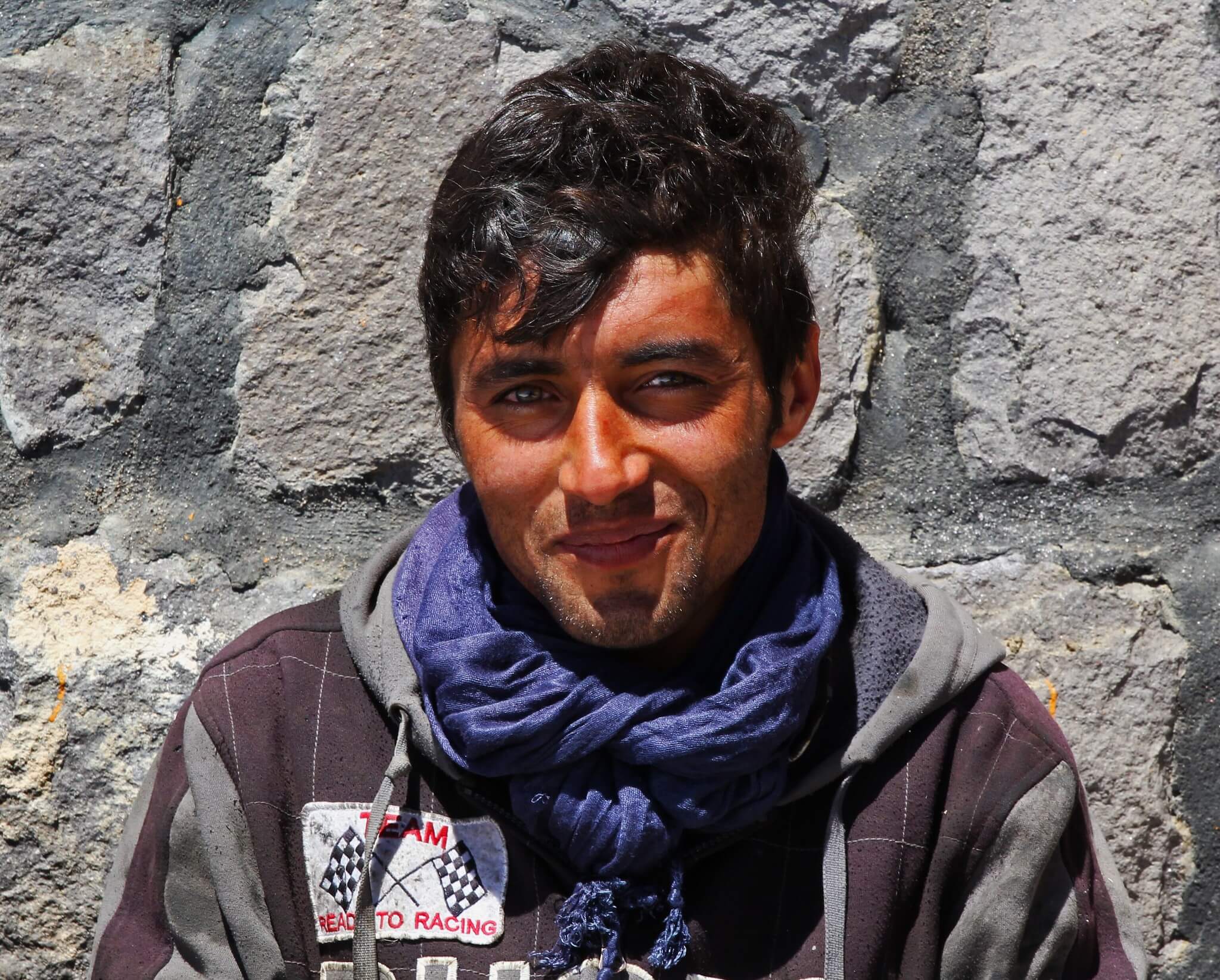
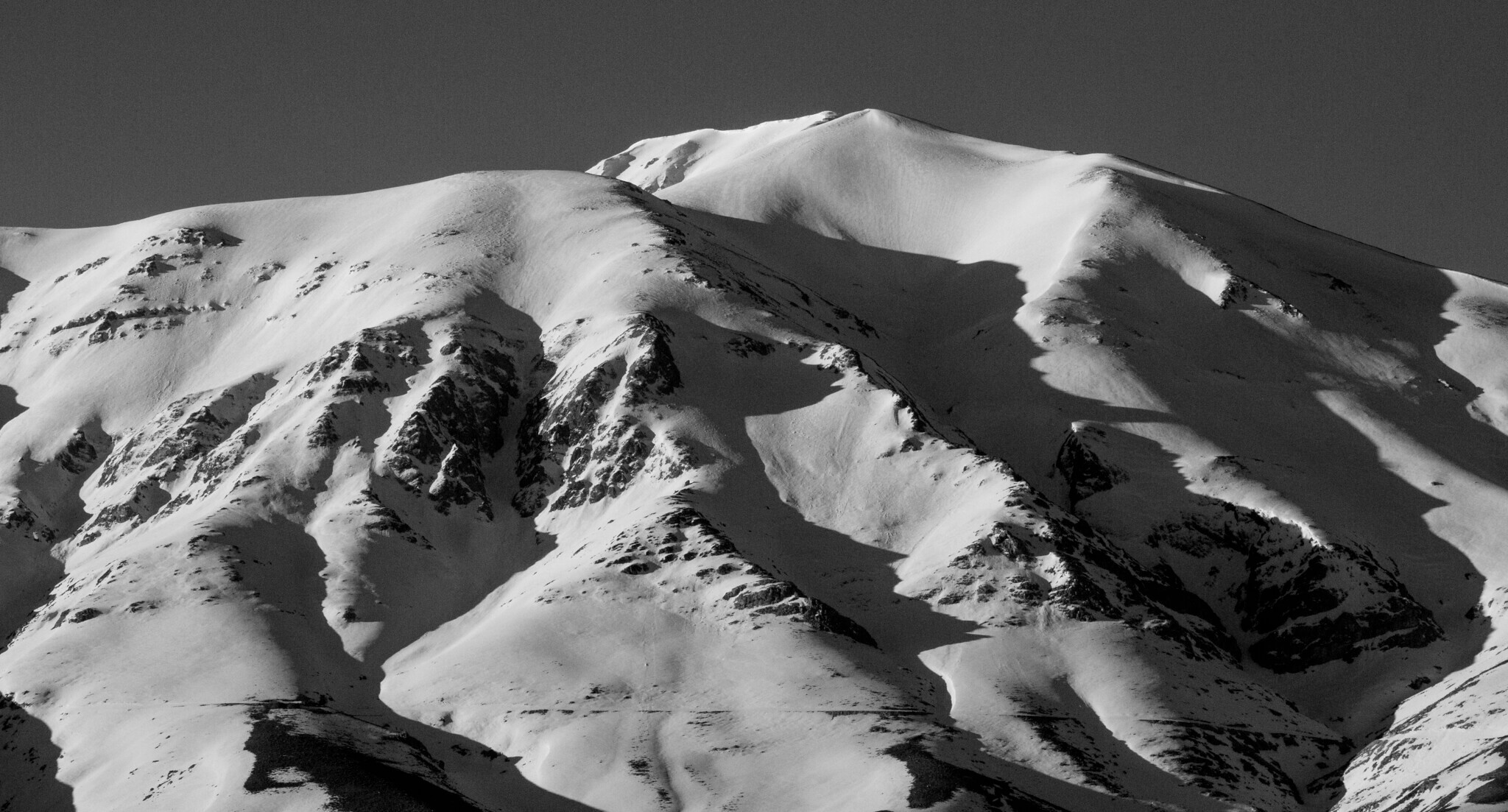
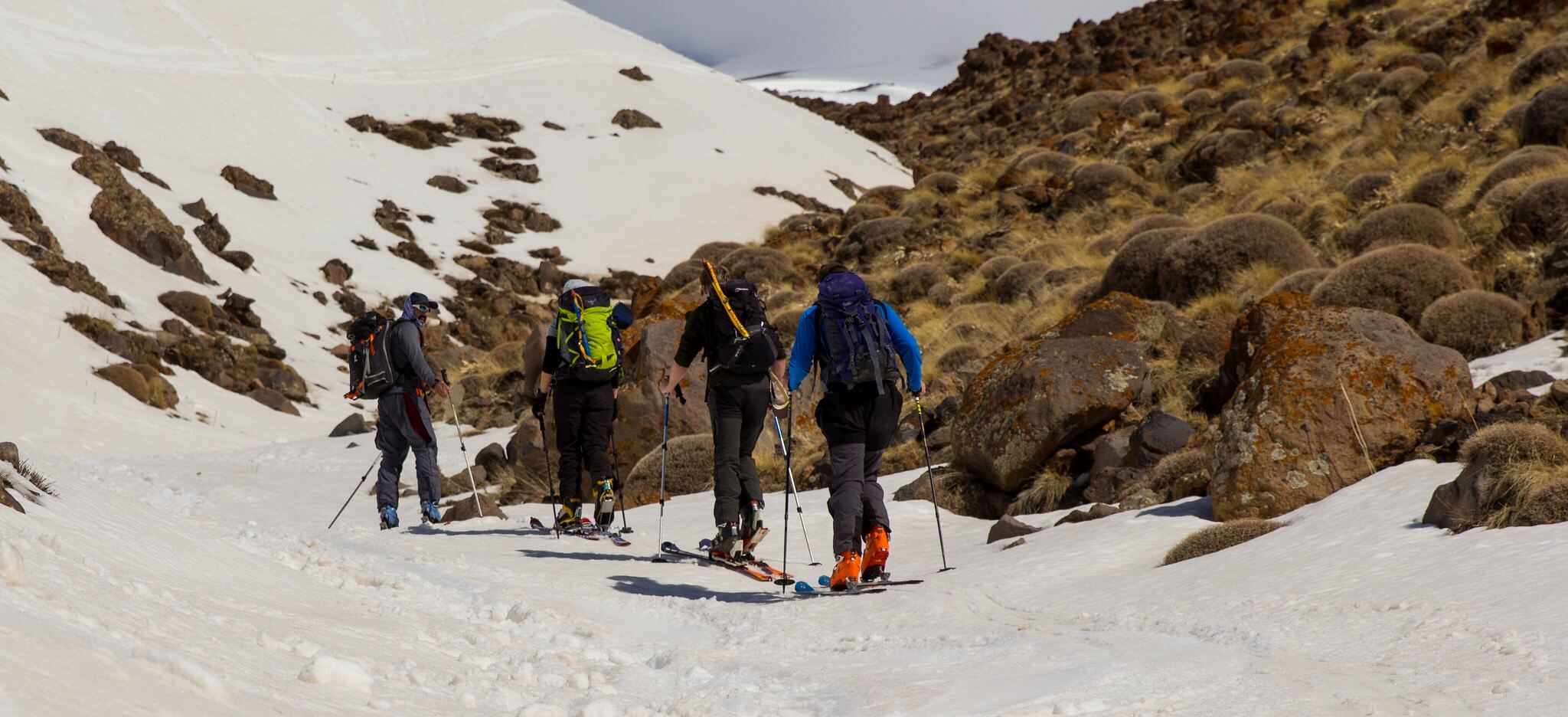
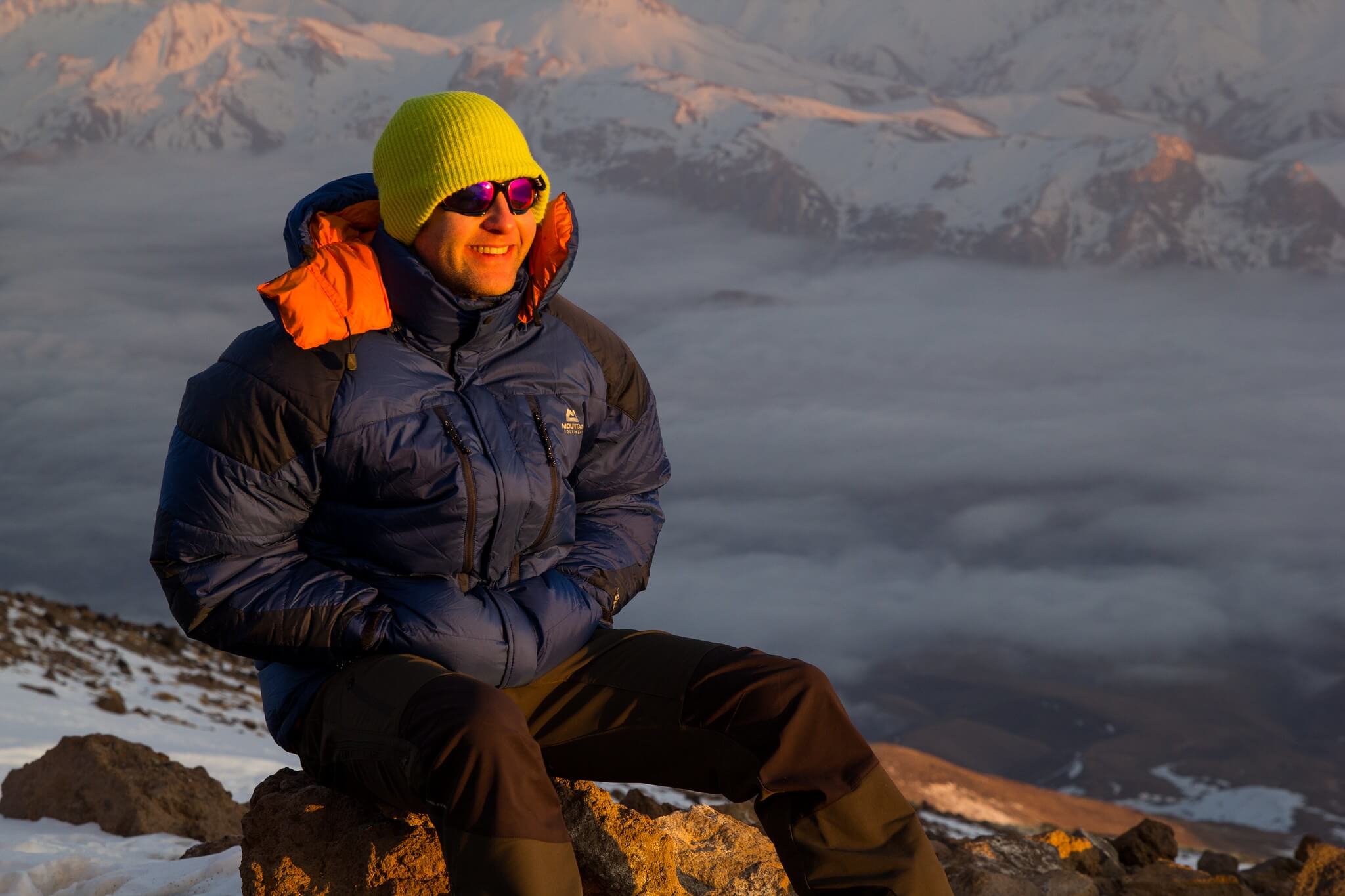
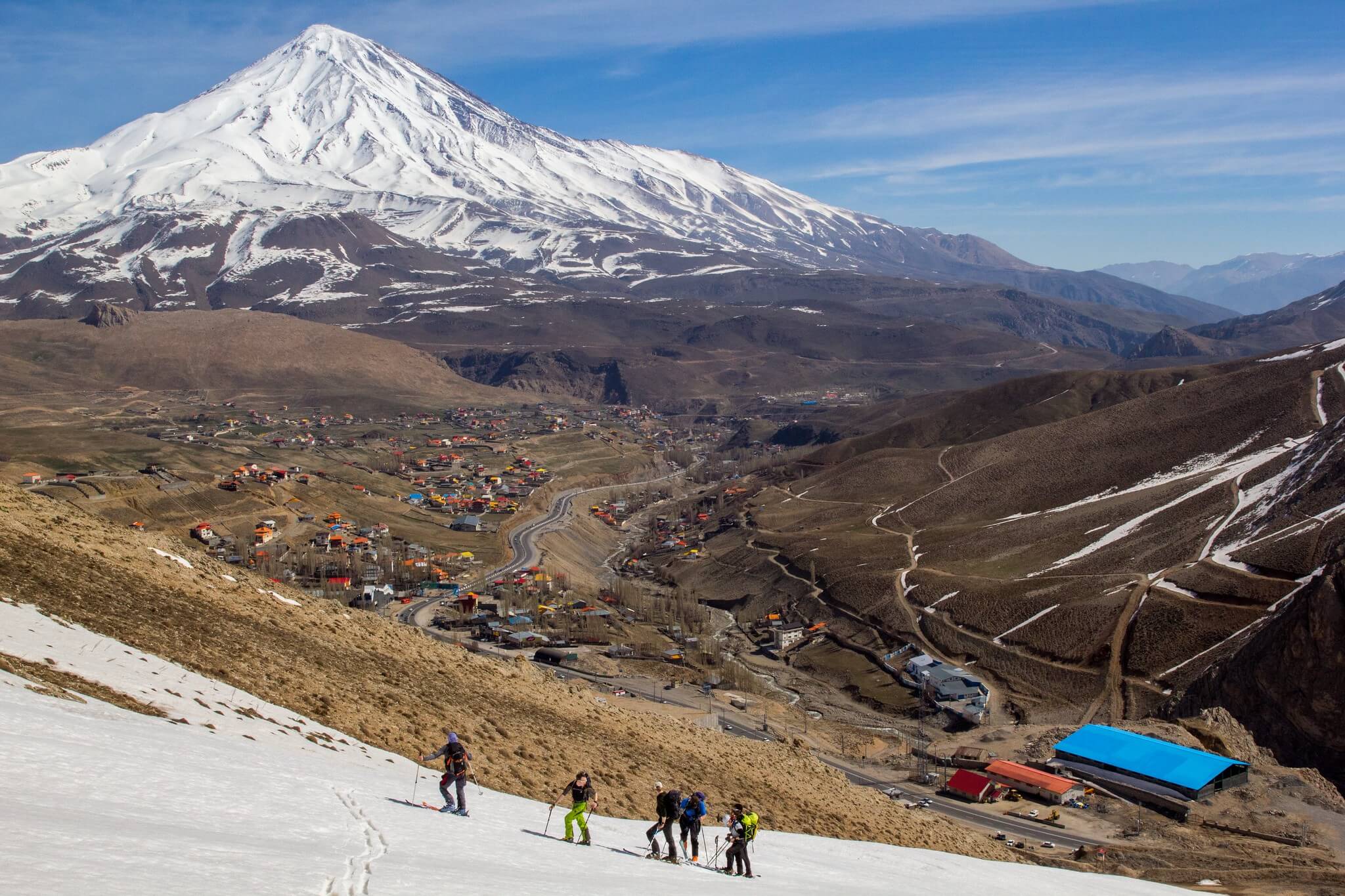
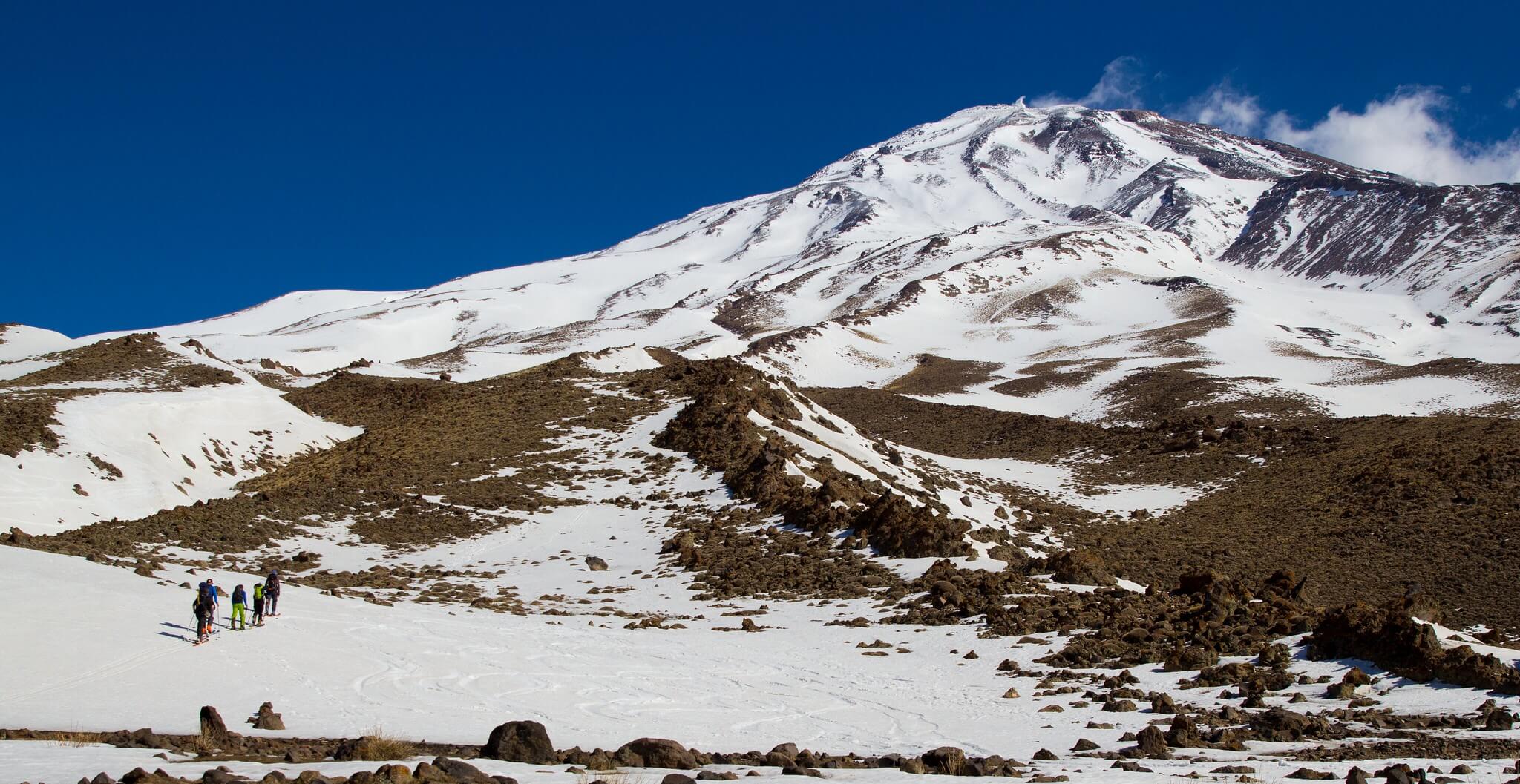
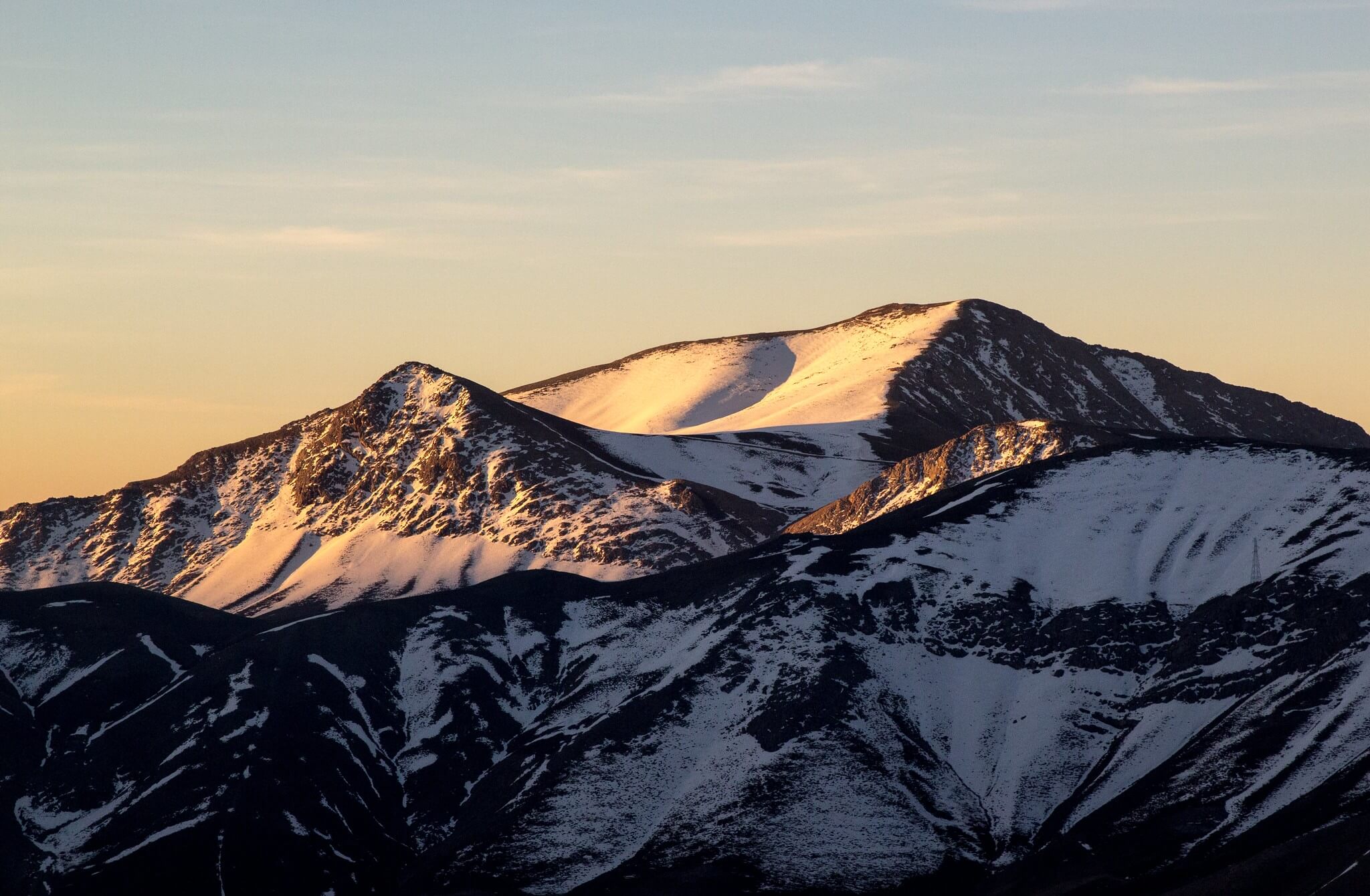
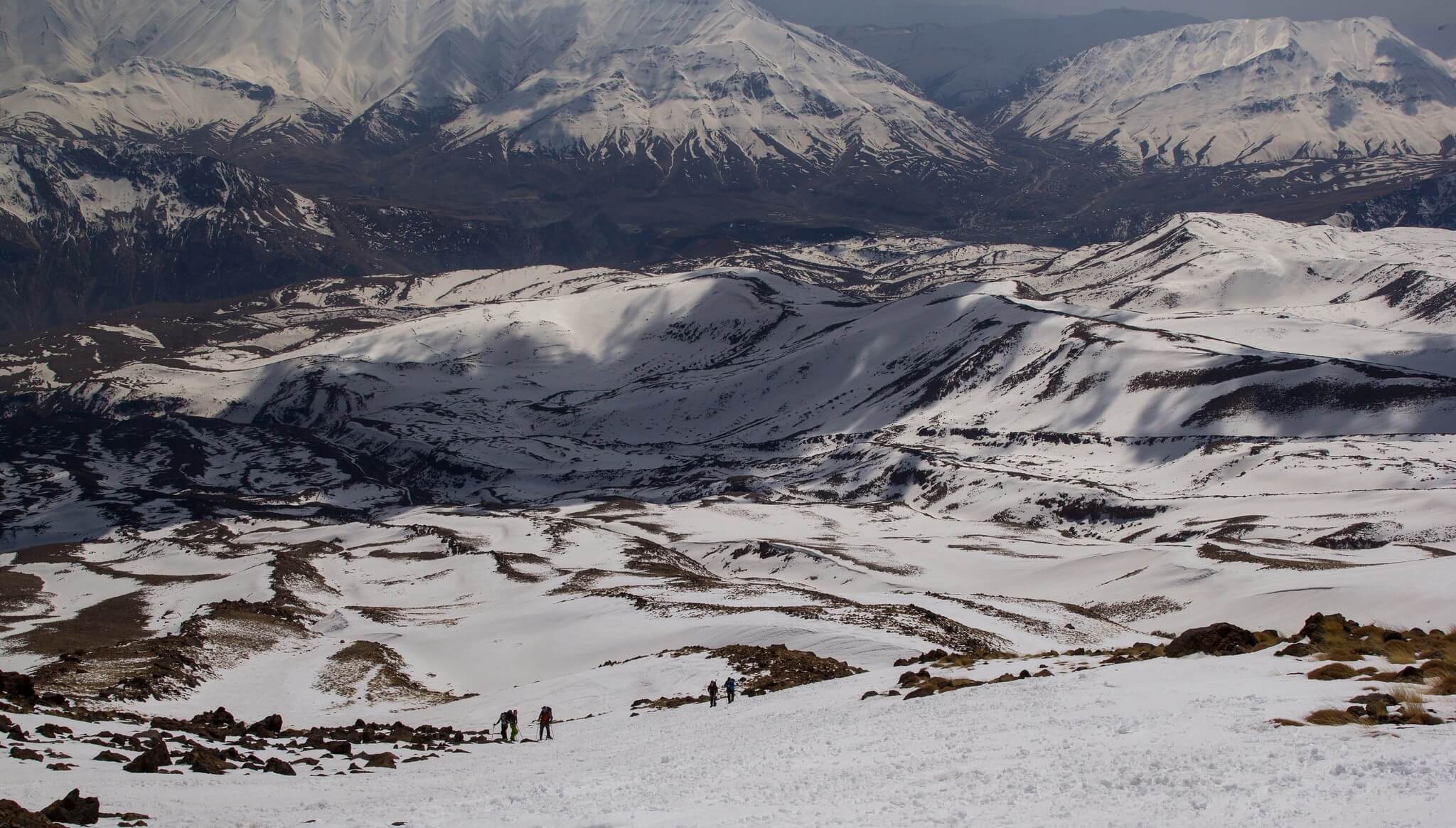
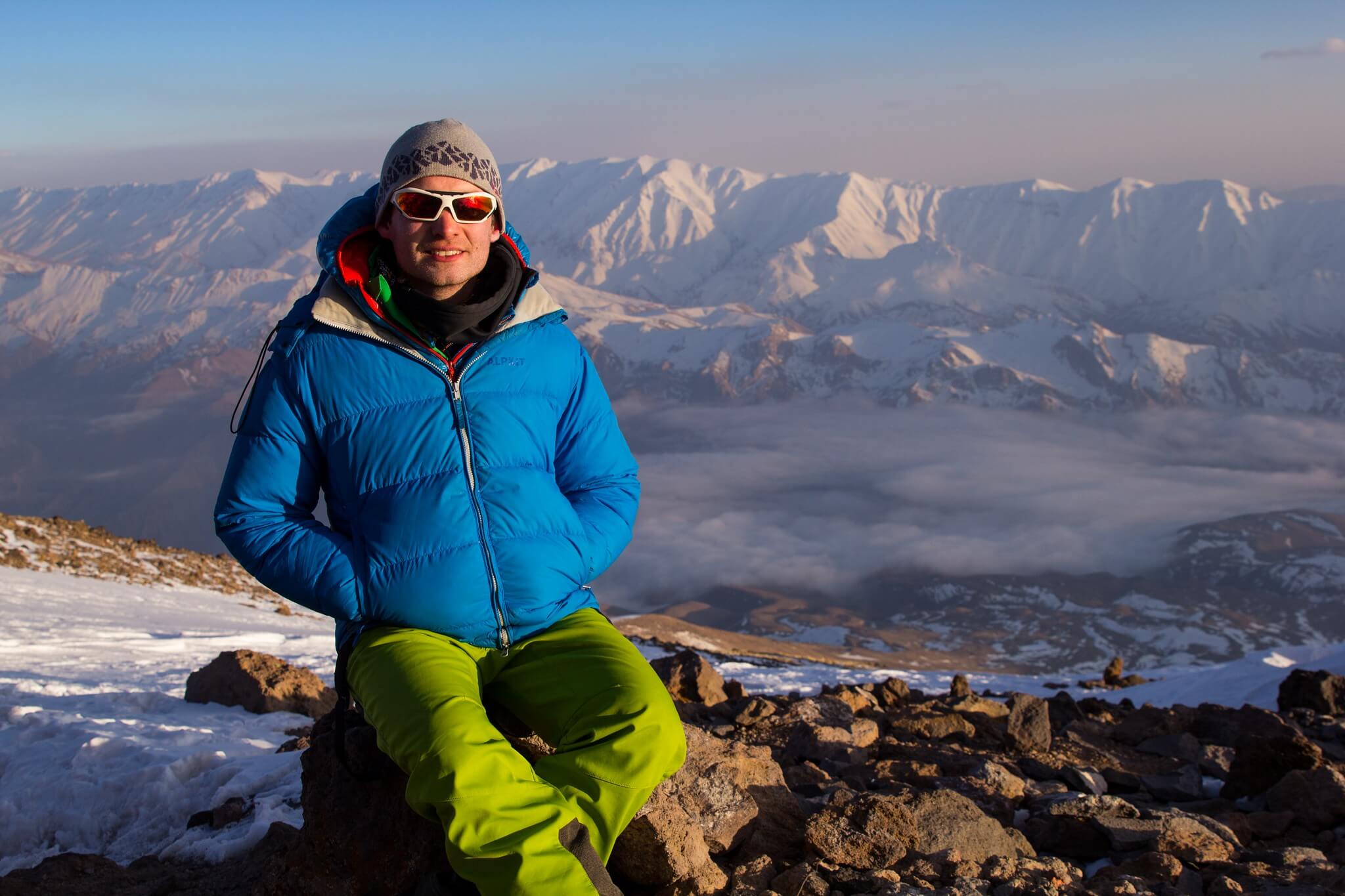
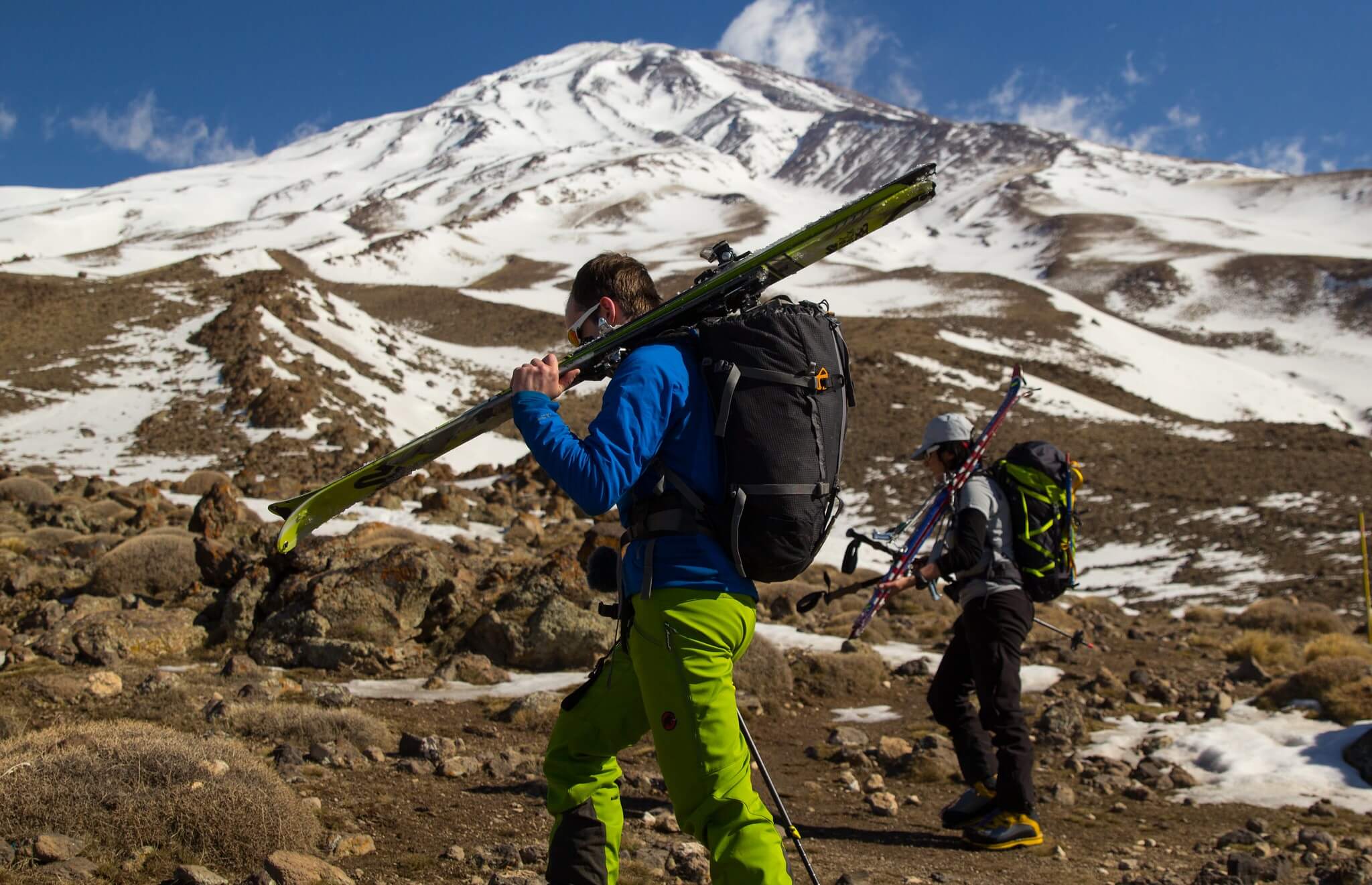
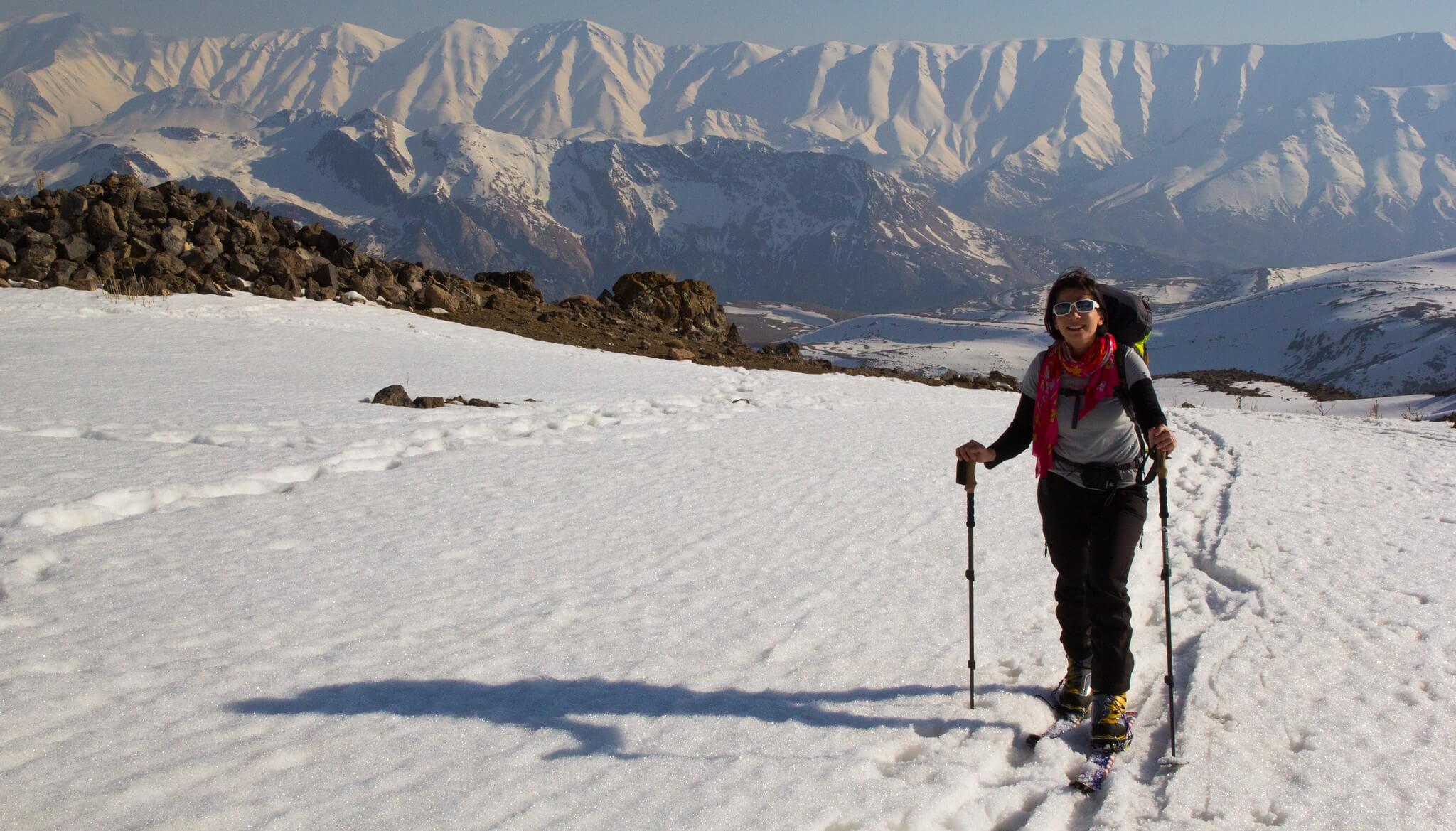
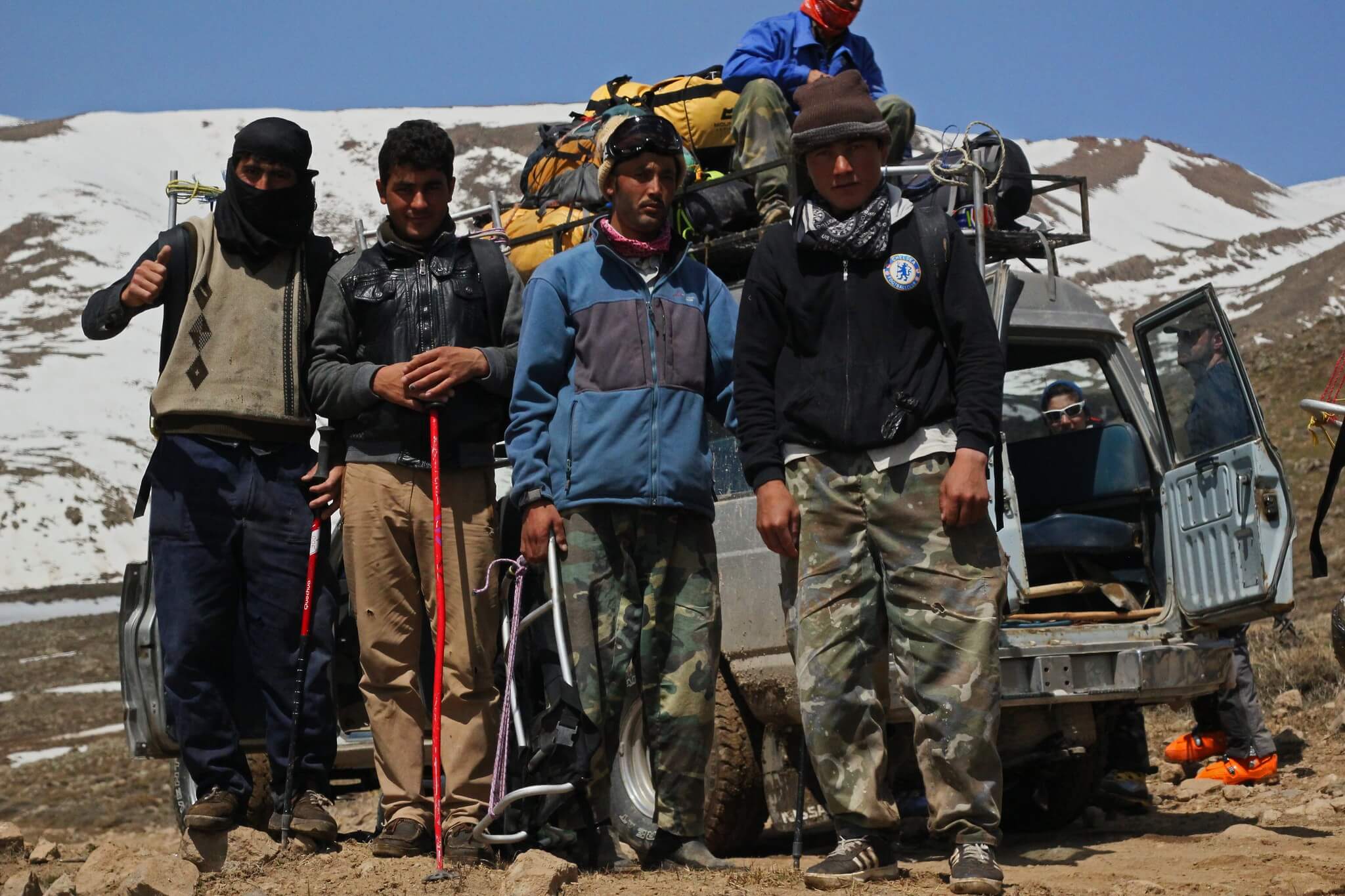
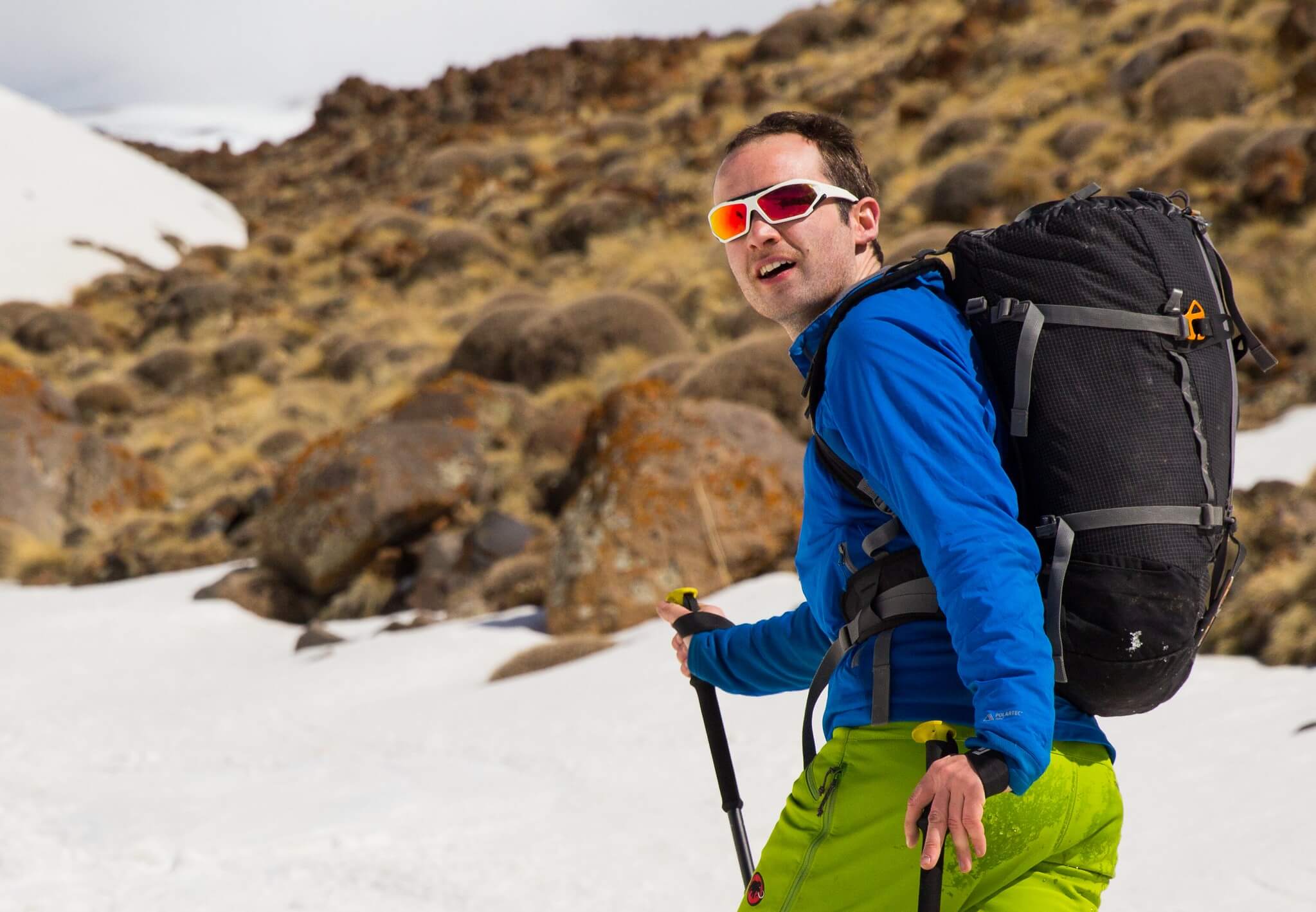
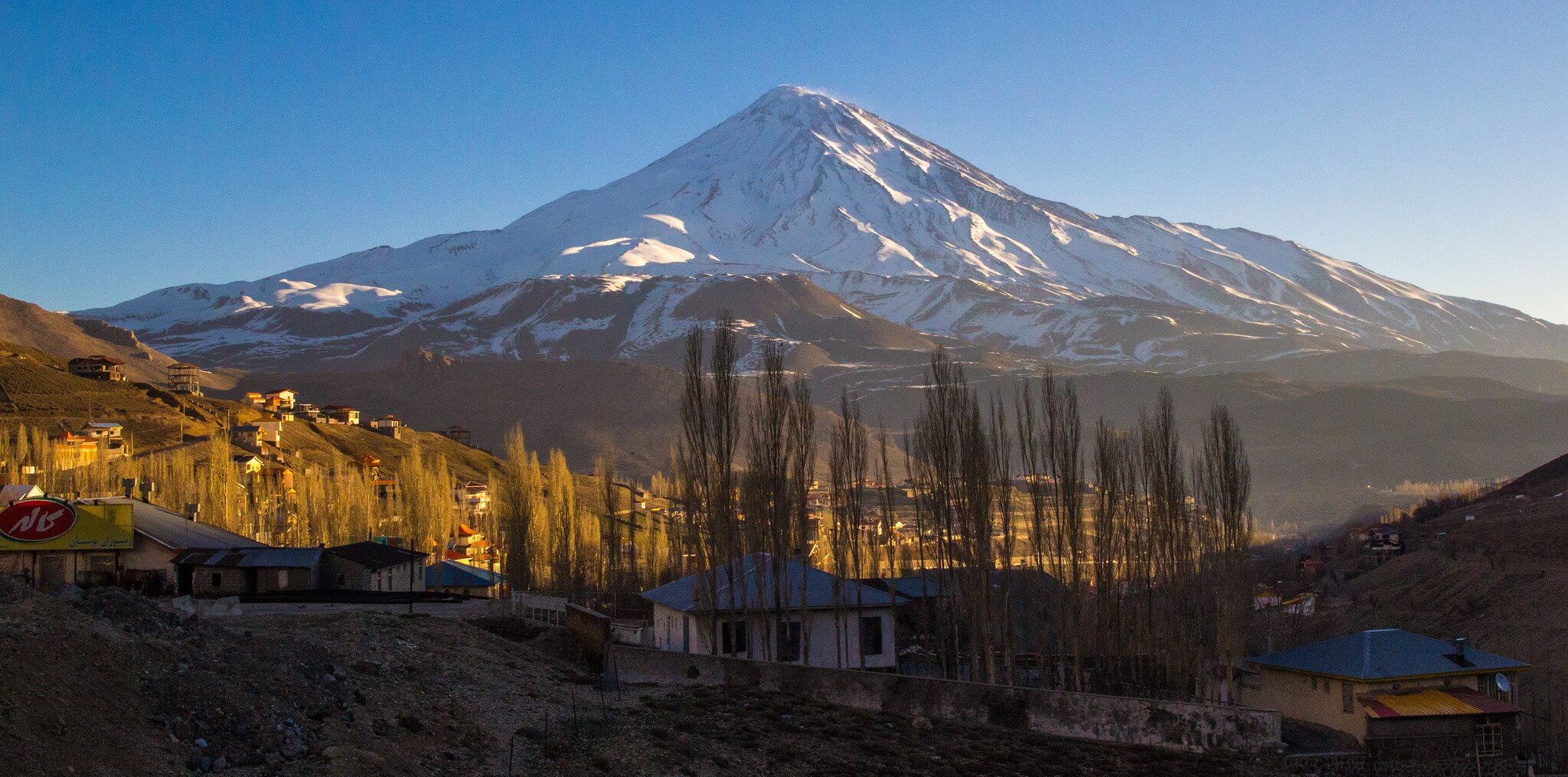
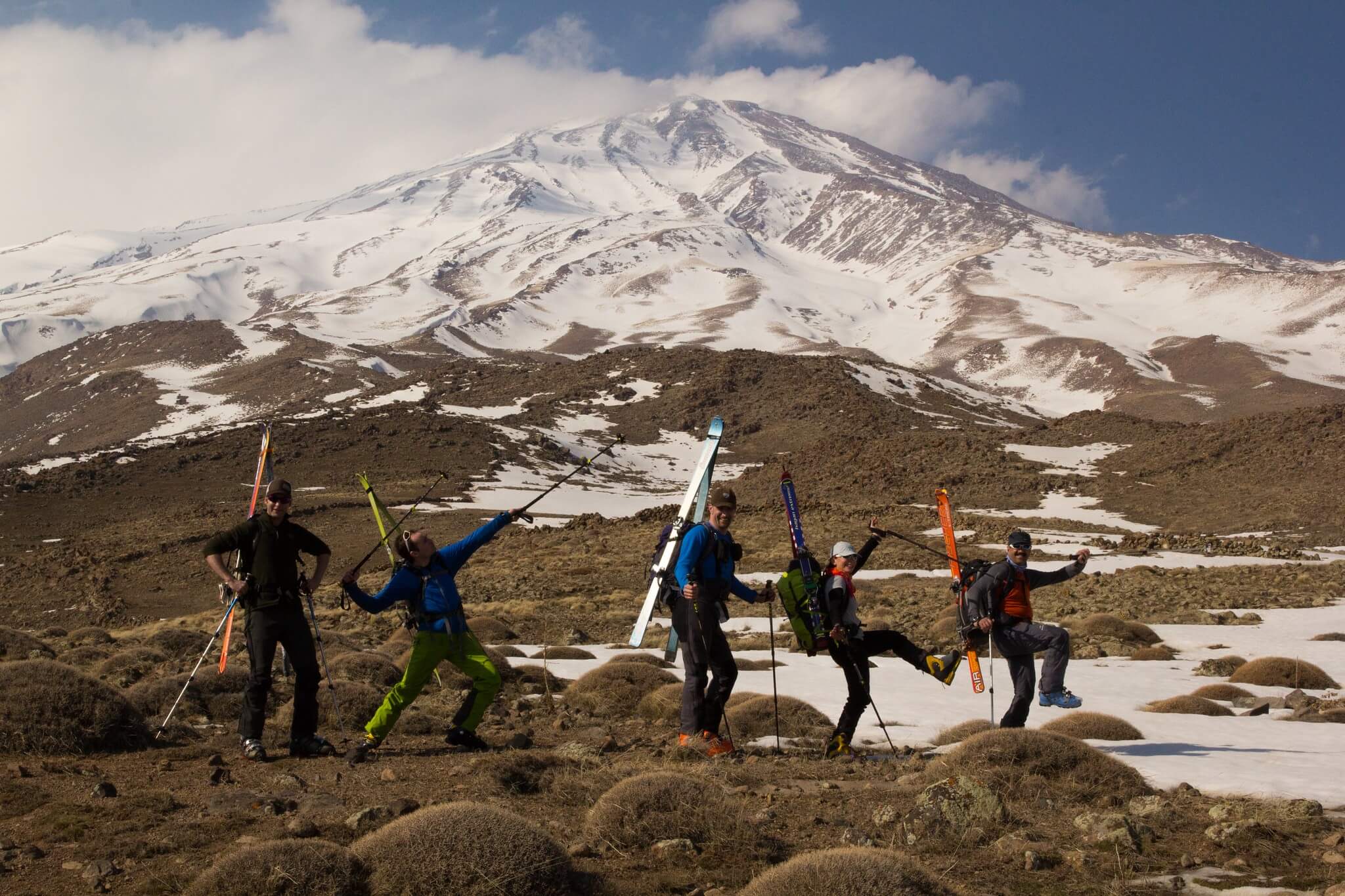
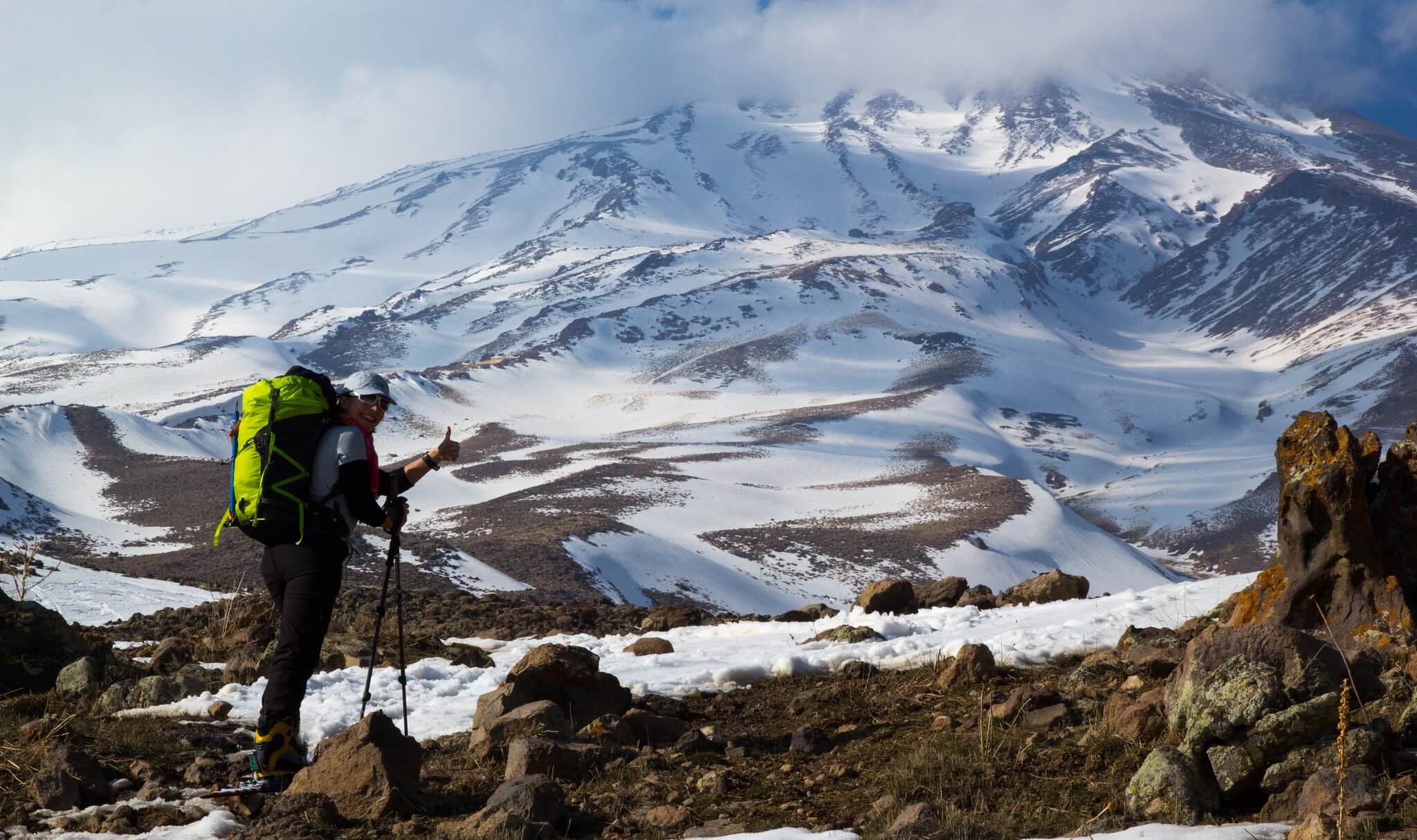
This set of Mount Damavand photos documents an Iranian-British ski descent of the peak via the south face. The last eruption on Mount Damavand (5,610 m) was over 7,000 years ago, around the time of ancient Egypt’s heyday. Abu Dulaf al-Khazarji, an Iranian poet and travel writer, was the first known person to reach the summit in 905 AD. For a few centuries since then, Iranians mined the peak’s slopes and caldera for sulphur. Aside from being the highest peak in the Middle East and Iran, it’s also the highest volcano in Asia, making it a sought-after objective for those pursuing the Volcanic Seven Summits (a rarely attempted and lesser-known sister challenge to the Seven Summits). Unlike the Seven Summits, which has been climbed by 400 or so people, only 25 people have completed the volcanic alternative. You can read more about the Volcanic Seven Summits via my ExplorersWeb story.
If these Mount Damavand photos whet your appetite for a visit, contact Persian Pursuits who can arrange the necessary permits and logistics. You can also watch a short film I shot about our Damavand ski-mountaineering trip, which was produced in conjunction with Ellis Brigham Mountain Sports, Trek & Mountain Magazine and BMC TV. The film shares the story of Shirin Shabestari (Persian Pursuits’ founder), who is an Iranian woman living in the UK, and explores how mountaineering in Iran played an important role in her upbringing.
There are approximately 16 routes leading to the summit, with the North-East, North, West and South routes being the most popular in the summer—they each have huts around 4,000m too, with a second one at 5,000m on the North route. Damawand.de provides extensive information about climbing the peak, including its routes, access and general logistics.